Results from the Annual National Youth Tobacco Survey (NYTS)
On this page:
2025 Findings on Youth Tobacco Use
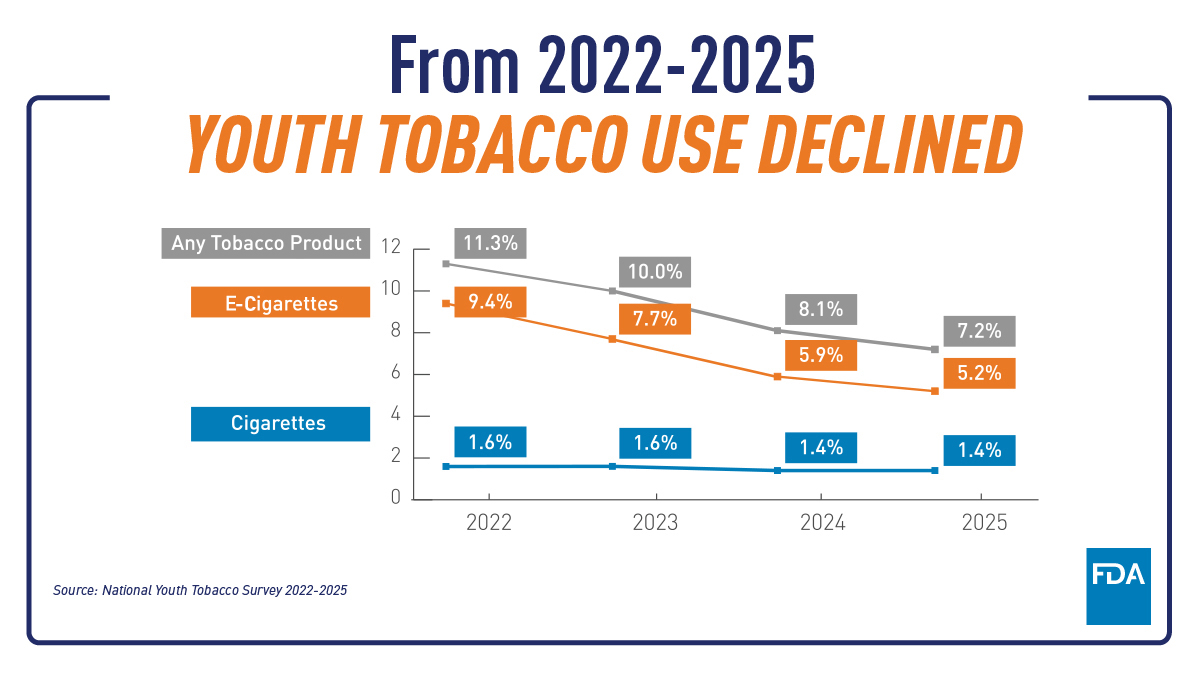
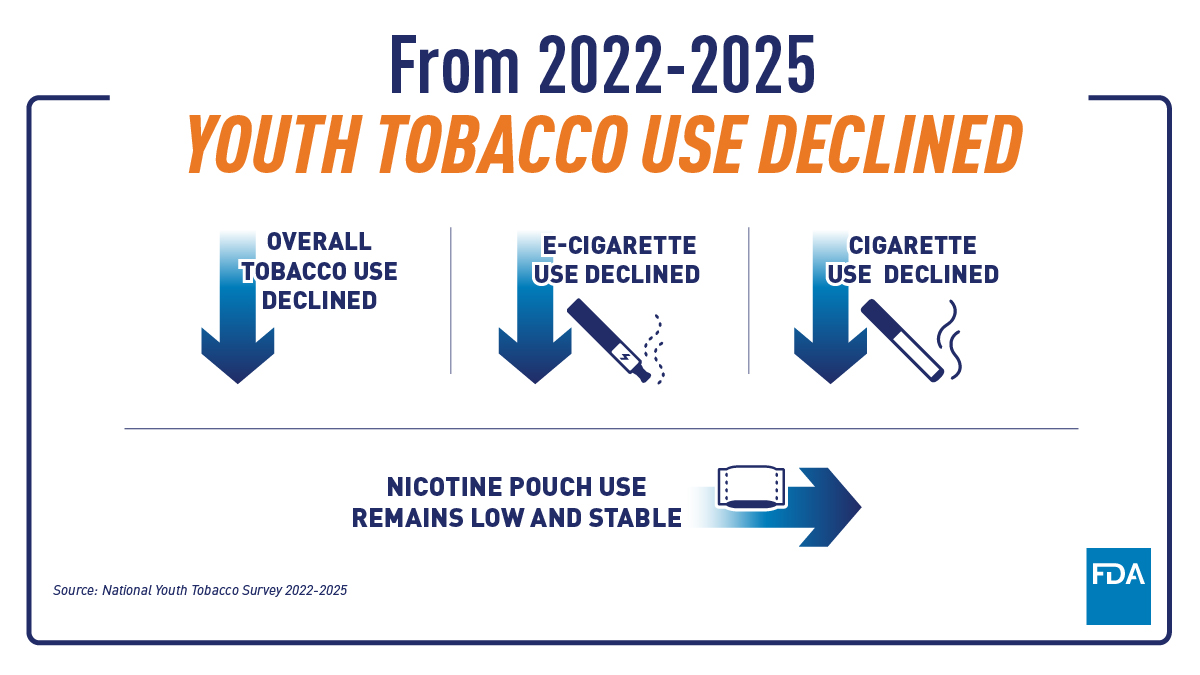
In June 2026, FDA published its analysis of data from the 2025 National Youth Tobacco Survey (NYTS) on youth tobacco use. In 2025, about 2 million middle and high school students reported current use (defined as use on one or more days during the past 30 days) of any tobacco product. During 2022–2025, current use of tobacco overall, e-cigarettes, and cigarettes declined among U.S. high school and middle school students. Current use of nicotine pouches remained low and stable during 2024–2025.
The 2025 NYTS data files, containing a dataset, format library, codebook, questionnaire, and methodology report, are publicly available for researchers, public health professionals, and other stakeholders to access and use in accordance with appropriate data use guidelines.
2025 Findings on Youth Use for All Tobacco Products
Current Use
- 7.2% of all students (2.01 million) reported current use of tobacco products
- 9.5% of high school students (1.50 million) reported current use of tobacco products
- 4.1% of middle school students (480,000) reported current use of tobacco products
- 2.6% of students (720,000) reported current use of any combusted tobacco product
- 2.7% of students (740,000) reported current use of multiple (≥2) tobacco products
Most Commonly Used Tobacco Products
- E-Cigarettes (5.2%)
- Nicotine Pouches (1.7%)
- Cigarettes (1.4%)
- Cigars (1.1%)
- Smokeless Tobacco (0.9%)
- Heated Tobacco Products (0.7%)
- Hookahs (0.7%)
- Other Oral Nicotine Products (0.6%)
- Pipe Tobacco (0.4%)
2025 Findings on Youth Use for E-Cigarette Products
Current Use
- 5.2% of middle and high school students (1.44 million) reported current use of e-cigarettes
- 7.1% of high school students (1.13 million) and 2.6% of middle school students (300,000) reported current use of e-cigarettes
Frequency of Use
- More than 1 in 4 (27.5%) of current youth e-cigarette users used an e-cigarette product daily
- More than 4 in 10 (41.2%) youth e-cigarette users reported using e-cigarettes on at least 20 of the last 30 days
Flavored E-Cigarette Use
- More than 8 out of 10 (89.4%) current e-cigarette users used flavored e-cigarettes, with fruit flavors being the most popular, followed by candy, desserts, or other sweets; mint; and menthol
- Over half (53.4%) of students currently using e-cigarettes reported using flavors with “ice” or “iced” in the name
Type of Device
- The most commonly used device among current e-cigarette users was disposables (66.3%), followed by prefilled/refillable pods or cartridges (12.0%)
Commonly Used Brands
- The most commonly reported brands reported among current e-cigarette users were: Geek Bar (64.1%), Elf Bar (21.5%), Lost Mary (19.8%), Raz (19.5%), and Vuse (15.9%)
2025 Findings on Youth Use for Nicotine Pouch Products
Current Use
- 1.7% of students (460,000) reported current use of nicotine pouches
Frequency of Use
- More than 1 in 6 (17.6%) youth nicotine pouch users reported using nicotine pouches daily
- More than 1 in 4 (26.3%) youth nicotine pouch users reported using nicotine pouches on at least 20 of the last 30 days
Flavored Nicotine Pouch Use
- More than 9 out of 10 (90.8%) current nicotine pouch users used flavored nicotine pouches, with mint flavors being the most popular, followed by fruit
Commonly Used Brands
- The most commonly reported brands reported among current nicotine pouch users were: ZYN (69.2%), on! (14.6%), Rogue (12.3%), ZONE (10.5%), and Grizzly (9.1%)